










In this article you’ll learn about…
- Why a complaint is more than a customer-service issue
- How response speed can affect customer retention
- Who should own customer recovery
- When to use an apology, refund, replacement or voucher
- Why returning customers are the real measure of recovery
- How YUMBI can connect feedback, recovery and customer behaviour
A complaint is not resolved when the ticket is closed
A missing ordered item may cost your QSR a mere R30. But losing the customer could cost you far, far, far more. Yet many QSR franchises still treat complaints as administrative cases. You acknowledge the message, send it to the QSR, issue a voucher and close the ticket. You move on. But did the customer ever order again? Or have they moved on as well? That question turns customer recovery into a revenue and retention discipline. A complaint is a sure sign that a customer may be at risk of leaving, forever and ever.
The recovery window starts while the experience is still unfolding
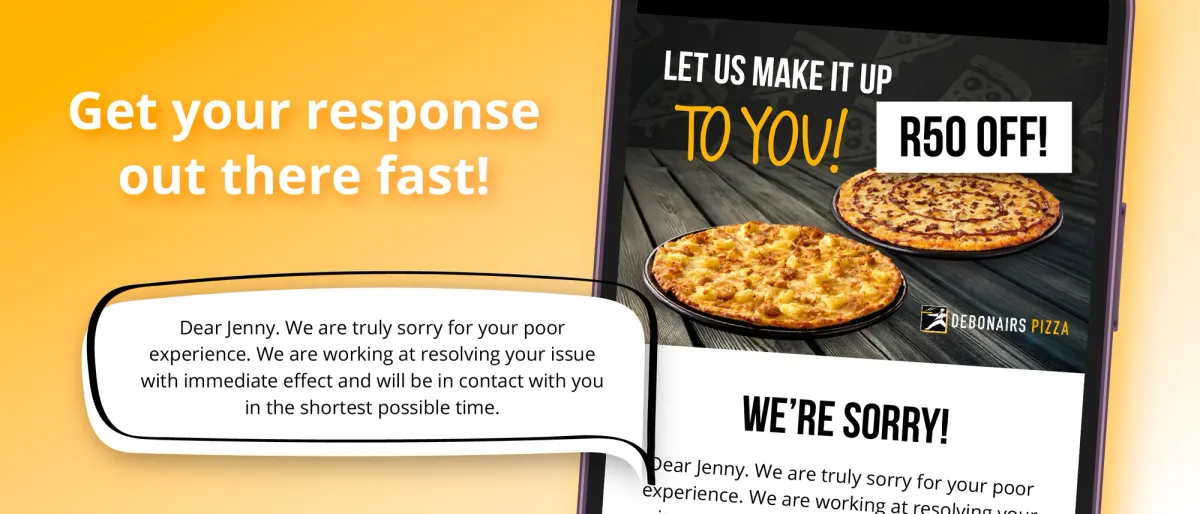
There is no single response time for every complaint. As a rule of thumb though, the more serious the problem, the faster the response should be. For urgent issues (such as a missing order, payment problem, wrong meal or severe delivery failure), aim to acknowledge the customer within minutes and start resolving the problem immediately.
For serious complaints, (think poor food quality or excessive delays), respond on the same trading day with a clear next step. Lower-severity feedback can follow a less urgent process, but should still always be acknowledged.
Speed really does matter because a customer who is still experiencing a problem can often be recovered. The longer you wait, the fewer options remain and the more frustrated and angry the customer becomes.
Who owns the customer?
For franchise groups, the best approach is centrally governed and locally resolved. The specific QSR should investigate and fix the local problem. The central brand team should set response standards, escalation rules and compensation guidelines. Remember, it’s not the customers responsibility to have to understand the organisation’s structure. They should simply feel that YOU are taking responsibility.
Apology, refund, replacement or voucher?
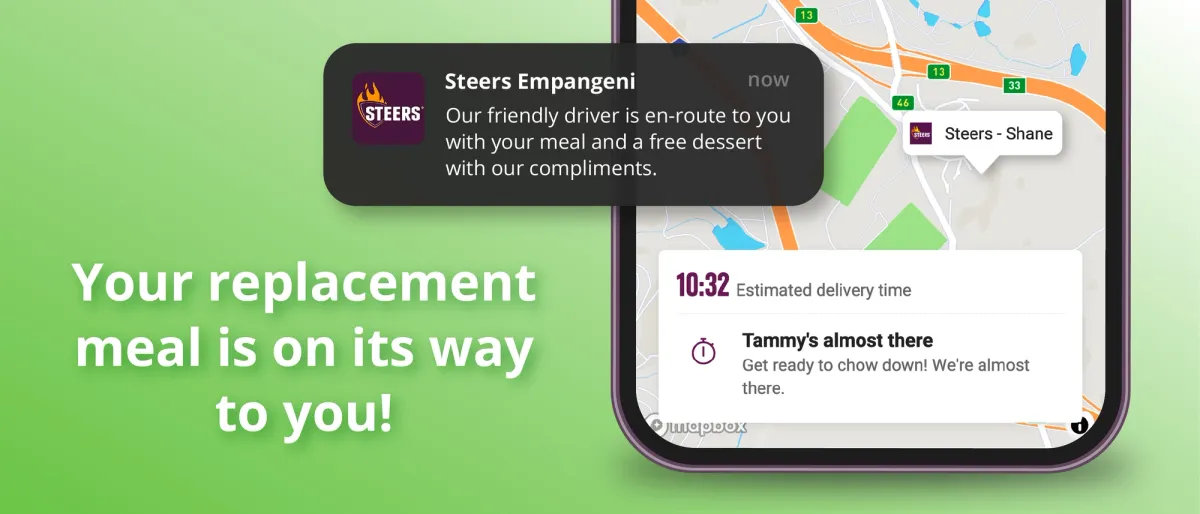
Not every complaint needs a voucher. An apology may be enough for a minor issue. A refund may be appropriate when a customer paid for something they did not receive. A replacement can work when the meal can still be corrected quickly. A voucher can encourage another order, but it should never be used to buy silence. The remedy should and must match the problem.
Do not measure closed complaints, rather measure returned customers
The real test of recovery is what happens next. Track response time, resolution, voucher redemption and, most importantly, whether the customer orders again within 7, 30, 60 or 90 days.
With YUMBI, BeHeard can capture the correct customer signal, Engage can support targeted recovery communication, and Insight can help show whether customers return and where problems keep happening.
A customer who returns is a commercial outcome. Treating your customers with respect and owning your mistakes goes a long way to ongoing loyalty!